


Khachanov: "You must not let bad energy settle in your mind"
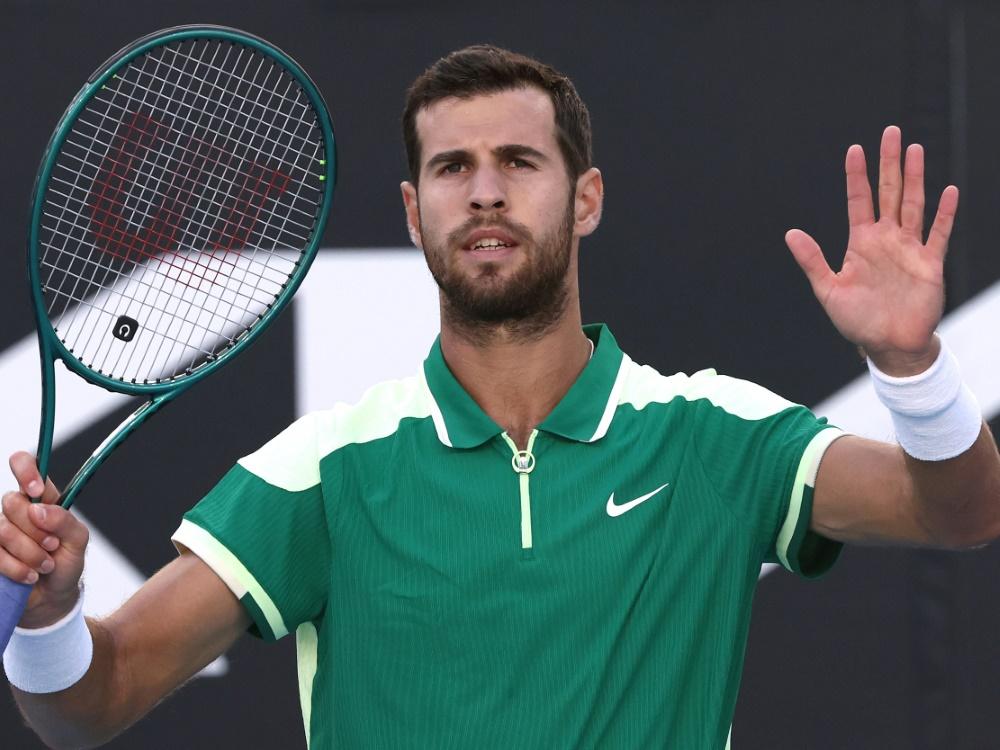

Karen Khachanov is making a strong comeback. Now the 23rd-ranked player in the world, the Russian reached two finals on the ATP Tour at the end of 2024.
One he won in Almaty against Gabriel Diallo. A few days later, he fell to Jack Draper at the same stage of the competition in Vienna.
Defeated in the third round of the Australian Open by Alex Michelsen, Khachanov also experienced disappointment in Doha.
As the defending champion in Qatar, the 28-year-old player was eliminated in his first match this year, losing to his compatriot Daniil Medvedev (4-6, 7-5, 6-3).
A week later, in Dubai, he was defeated in the second round by Stefanos Tsitsipas (7-6, 2-6, 6-4), the eventual tournament winner, after overcoming his nemesis, Dan Evans, for the first time in six encounters in the first round. In an interview with the YouTube channel More, Khachanov reflected on the past two weeks.
"In the last two tournaments, I lost to Daniil Medvedev. If I hadn't fallen to him, I might have gone further.
In Dubai, I faced Tsitsipas. It was a tight match where I really had my chances, and then we saw that he went on to win the tournament.
At the end of the day, it shows that I'm not far off. If you lose these matches feeling like you had no chance, that's one thing.
But if you realize you have the game to win matches, especially against those players, that's the most important thing. When you're in form, you should get results at some point somewhere.
I think the most important thing is to be in good psychological condition, not to give up. You must not let bad energy settle in your mind.
If you don't reach the top immediately, you will certainly get there later," he said in recent hours before starting the Indian Wells tournament, where he will face Tomas Martin Etcheverry or Jakub Mensik in the second round.




 Struggles with injuries and lack of money: the double punishment for tennis players far from the Top 100 stars
  Tennis, Saudi Arabia’s new playground
  The outfit wars: how clothing contracts dominate the tennis business
  The impact of the war on tennis in Ukraine: financial aid, foundations, governing bodies and all‑round headaches
