

Andy Roddick: 'Federer Was the First True Attack-Defense Fusion Player'
Roddick Analyzes Federer's Game: Swiss Maestro Revolutionized Tennis with Unprecedented Versatility
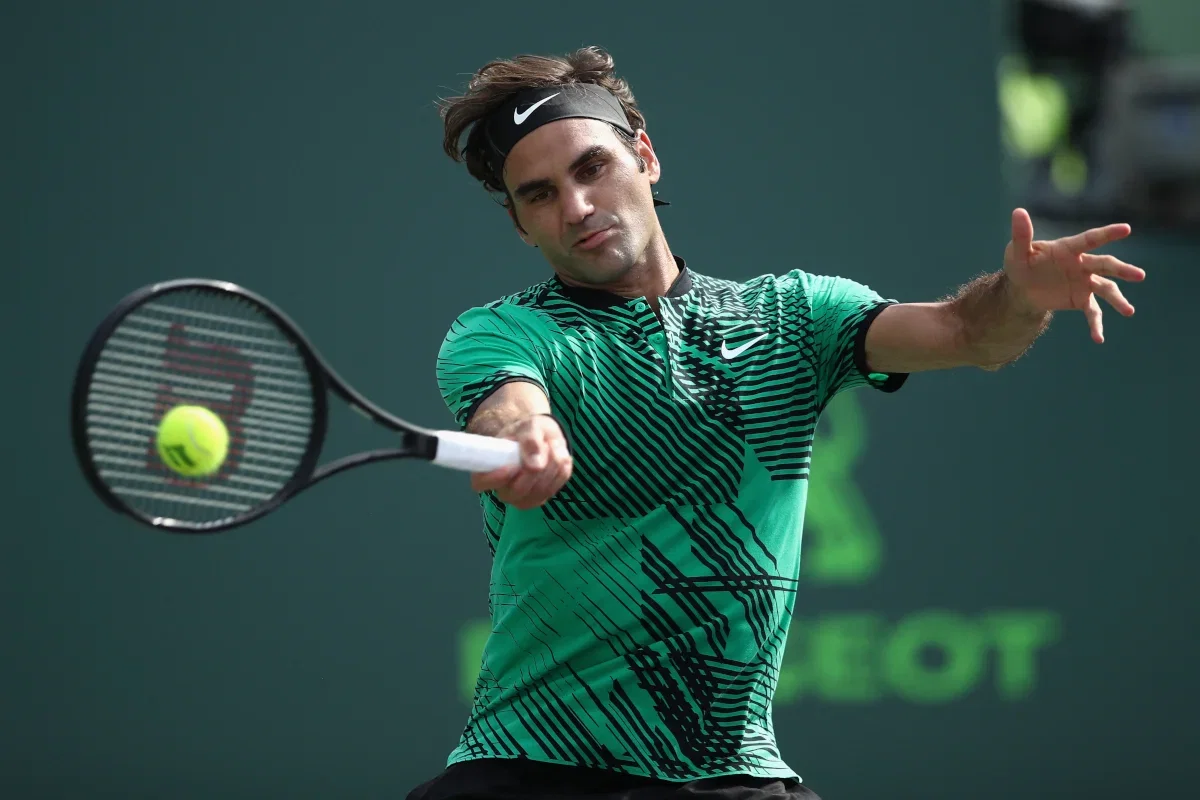


On his podcast Served with Andy Roddick, the American delved into his matches against Federer.
One thing quickly became clear: reducing the Swiss to just his serve or legendary forehand would be a monumental mistake.
Roddick emphasizes the richness of Federer's game, capable of dominating in all areas of the court, with no real exploitable weakness.
He explains: "We often talk about his serve, of course, but that would miss the point. Federer is a complete player, one who leaves no gaps.
In his prime, he was arguably the first to be both the boss in attack and ultra-solid in defense."
A Revolution in Modern Tennis Logic
According to Roddick, Federer didn't just dominate his opponents: he changed the very way tennis is thought about.
Before him, great champions typically excelled in one specific area. Some relied on defense, others on attack, but rarely both at once.
He continues: "Back then, every player had their signature. Hewitt was about combativeness, Sampras serve-and-volley, Agassi early ball striking. I myself was far from an outstanding defender. Everyone had their identity.
Pete, for example, was pure efficiency: if you got into a long rally, you knew that wasn't his game. Agassi always wanted to take control of the play. Borg, McEnroe... each had their style.
Then Federer comes along and breaks all that. He gives you no space: you can't attack him, you can't outmaneuver him. And at that point, you just wonder: 'how do you beat him?'
Then came Novak, Rafa... who pushed this versatility even further. Today, we still see it in players like Alcaraz or Sinner."
Implacable Domination: 21 Wins to 3
The numbers speak for themselves. Against Roger Federer, Andy Roddick won only 3 out of 24 meetings, with 21 losses.
A heavy record, but one the American now discusses with humor and perspective. Because beyond the score, it's the feeling of tactical helplessness that remains.
Federer could do everything: vary the pace, dictate rallies, adapt in real time, and above all, prevent any opponent's strategy from really working.
A Golden Era, Between Regrets and Pride
Despite his struggles against Federer, Andy Roddick hides neither frustration nor bitterness. On the contrary, he asserts his place in a golden generation of men's tennis.
An era marked by Federer's dominance, but also by legendary rivalries that shaped the sport's history.
Since his US Open win in 2003, no American player has won a Grand Slam title. A statistic that illustrates the current difficulty for the United States to regain its place at the top.
And as modern tennis is now dominated by players like Jannik Sinner and Carlos Alcaraz, one question remains: will an American player soon break this streak?

