

When qualifying becomes a show: the transformation of Opening Week in Melbourne and Paris
Long regarded as a simple appetizer before the main show, qualifying week has now established itself as an event in its own right. Between raw emotions, spectacular innovations, and record attendance, Opening Week is shaking up the codes of world tennis.
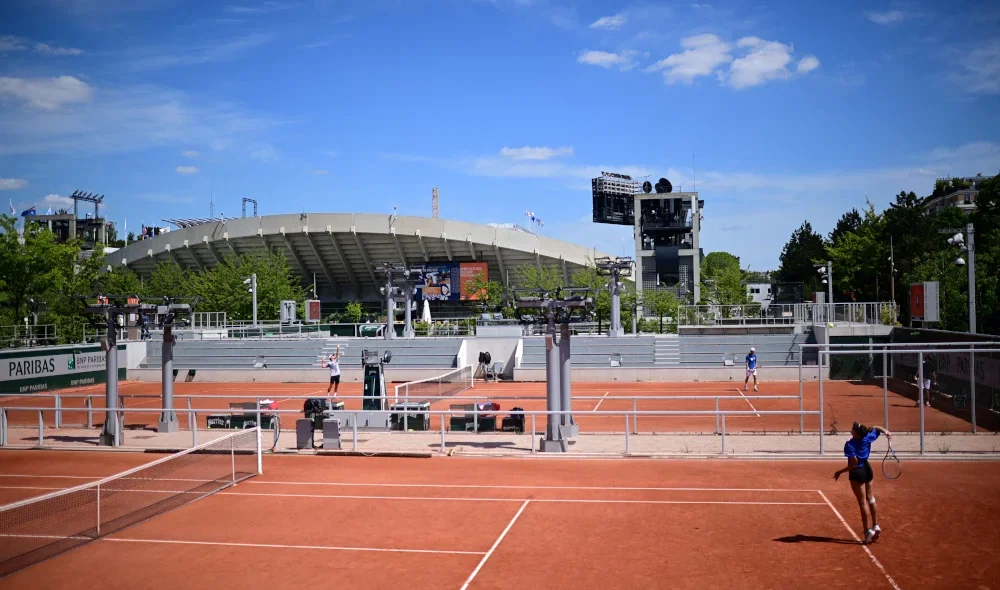


Opening Week, the week of Grand Slam qualifying, represents a fascinating universe of professional tennis that has been gaining in popularity and recognition for several years, whereas it was traditionally relegated to the background compared to the main draw.
High-stakes qualifying
These qualifying rounds, held the week before the official start of the tournament, give players ranked roughly between No. 100 and No. 250 in the world a chance to reach the main draw and earn precious ATP or WTA ranking points, as well as prize money that they do not find on the Challenger Tour (around €20,000 for a Challenger winner versus €78,000 for a first-round appearance at Roland-Garros).
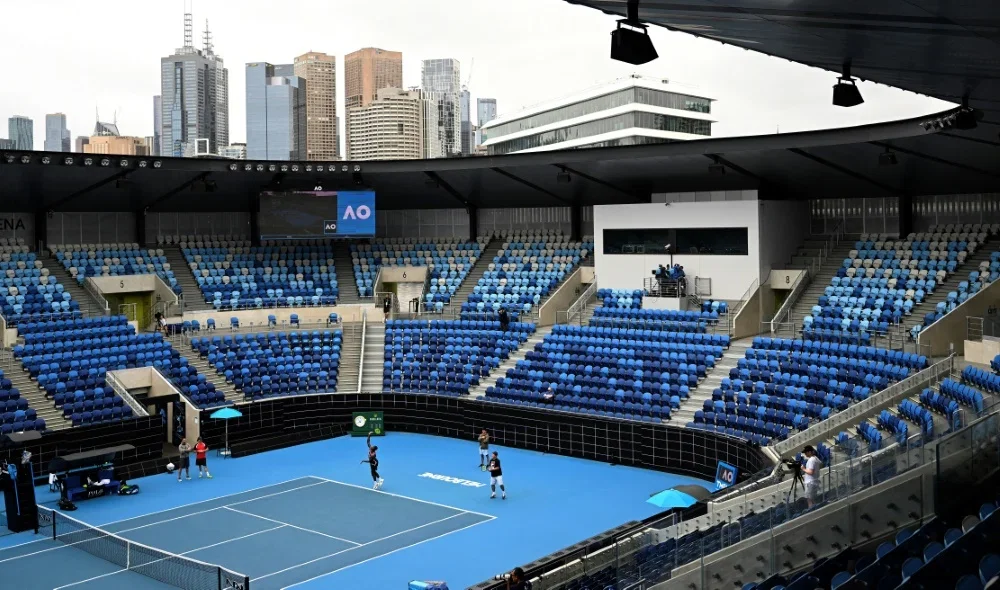
The special atmosphere of qualies is also a major attraction: you get a more intimate and authentic vibe, with matches played on outside courts where the crowd, often made up of true connoisseurs and passionate fans, can get very close to the players and witness battles of remarkable psychological intensity, since every point can change the course of a career.
What makes these qualifying rounds unique is their ruthless format, which generates extraordinary human stories: emotional comebacks by players returning from injury, hungry young talents chasing their first big opportunity, or former top players trying to recapture their past glory.
The recent buzz around this week is partly explained by the new energy injected by certain Grand Slam tournaments, including the Australian Open and Roland-Garros. Thanks to new innovations, qualifying week breaks attendance records every year.
Stories born during qualifying

Success stories like that of Emma Raducanu, who came through qualifying at the 2021 US Open before going on to win the title, or the heroic runs of many qualifiers reaching the latter stages of majors, have helped transform how these qualifying rounds are perceived.
They are now viewed as a show in their own right, where you can see tennis in its purest, most hard-fought form, stripped of the glitter of the main draw but rich in authenticity and suspense that captivate an ever-growing audience passionate about these gladiators in the shadows.
MILLION DOLLAR 1 POINT SLAM, TOP PLAYERS’ PRACTICE: HOW THE AUSTRALIAN OPEN MAKES QUALIFYING WEEK ATTRACTIVE
“Opening Week at Australian Open 2026 will be bigger and better than ever.” That’s what the Australian Open promises on its website. Qualifying week, now commonly rebranded as “Opening Week,” is proving increasingly popular with spectators.
Long viewed as the poor relation of these prestigious competitions, it has undergone a genuine transformation in recent years. Traditionally shunned by the general public due to the absence of headliners and tour stars, this preliminary phase used to suffer from low attendance and a somewhat gloomy atmosphere in sparsely filled stands.
Major measures to enhance qualifying week
Aware of this lack of interest and eager to highlight their entire event, the organizers of the various Grand Slams have multiplied initiatives to burnish the image of qualifying.
On the agenda: a much more accessible pricing policy with cheaper, sometimes even symbolic tickets, allowing families and fans on tighter budgets to experience a Grand Slam.
The venues now host a range of entertainment, partner villages, activities for children, and improved food areas, turning a visit into a truly festive outing.
This strategy is paying off: the stands are gradually filling, the atmosphere is getting warmer, and the public is enthusiastically discovering these players fighting for a spot in the main draw, some of whom may become the champions of tomorrow.
An unusual event mixing amateurs and pros
To help liven up this week, the Australian Open has put several things in place. In addition to the qualifying matches, the 2026 edition will offer practices by the best players in the world on the show courts, musical performances, and the Million Dollar 1 Point Slam.
This mini-tournament features amateur and professional players, with 1 million Australian dollars promised to the winner. As the name suggests, each match is played on a single point.
FROM OVERLOOKED WEEK TO MUST-SEE EVENT: OPENING WEEK IS A HIT AT ROLAND-GARROS
Opening Week has become a must-see event at Roland-Garros. Initially little-known and overlooked by the general public, the tournament organizers have gradually turned this week into an increasingly attractive proposition.
Opening up the main courts
Every year, it reaches new attendance records: 75,000 spectators over 5 days in 2024 and 80,000 in 2025. Among the innovations is opening Court Suzanne Lenglen to matches, which makes it possible to sell more tickets.
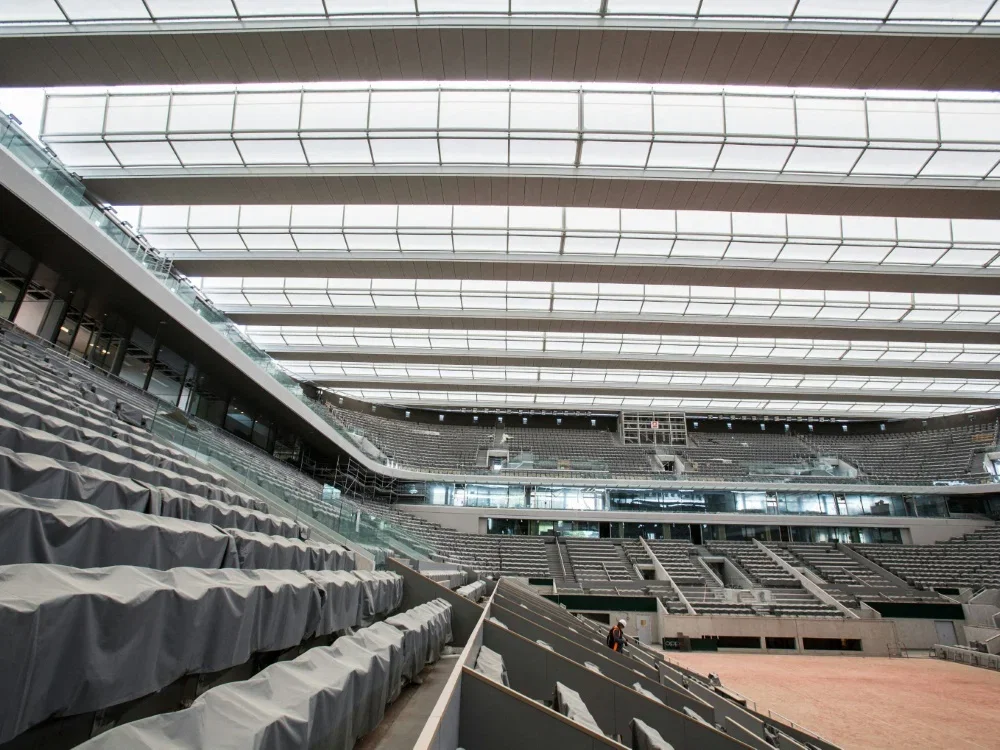
Having such a big court for qualifying allows a wider audience to see the best French players, the top prospects already in the spotlight, or former stars, as in the case of Dominic Thiem in 2024, who played qualifying on this court.
Court Philippe Chatrier is also open to the public, who can go there freely to watch practice sessions of the top players who are already in the main draw.
For €29, spectators get access to continuous tennis from 10 a.m. onward. These innovations allow Roland-Garros to further boost its appeal and to continually increase its ticketing revenue.
Construction work that took the tournament to another level
This income is more than welcome for a tournament that had to mobilize significant resources to finance the complete renovation of the outside courts, aiming to improve playing conditions and the spectator experience.
The most ambitious project involved the total reconstruction of Court Philippe Chatrier, the temple of French tennis, which was fitted with a retractable roof inaugurated in 2020, allowing play in all weather conditions.
At the same time, Court Suzanne Lenglen also received a roof, modernizing the second-largest stadium in the complex. This massive construction work, spread over several years, created a crucial need for new revenue streams, pushing organizers to explore various sources of funding and to optimize the tournament’s income in order to carry out this ambitious transformation of the Porte d’Auteuil site.
OPENING WEEK, A NEW CORNERSTONE OF GRAND SLAM TOURNAMENTS
Thus, Grand Slam qualifying week is undergoing a spectacular revival that reflects a profound shift in how professional tennis is approached.
What was once seen as a mere compulsory prelude has become an event in its own right, capable of attracting tens of thousands of spectators and generating genuine popular excitement.
A winning bet for the tennis ecosystem
This transformation is no accident: it stems from a well-thought-out strategy combining affordable pricing, spectacular innovations like Australia’s Million Dollar 1 Point Slam, and the enhanced use of prestigious infrastructures such as Court Suzanne Lenglen at Roland-Garros.

By giving the public the chance to watch star players’ practice sessions while discovering the fierce battles of the qualifiers, organizers have created a unique experience blending proximity, authenticity, and entertainment.
Beyond the festive and commercial aspects, this dynamic benefits the entire tennis ecosystem: it gives unprecedented visibility to mid-ranked players, helps tournaments finance their ambitious infrastructure projects, and, above all, democratizes access to Grand Slams by reaching a broader and more diverse audience.
Opening Week has now established itself as an essential component of the Grand Slam experience, proof that professional tennis can reinvent itself to stay in tune with the expectations of a public seeking authentic emotions and accessible entertainment, while preserving the combative, passionate essence that makes this sport so beautiful.
