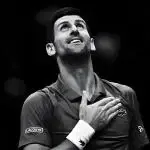
Yannick Noah: From the Racket to the Microphone


Winner of Roland-Garros in 1983 and an iconic figure in French tennis, Noah did not wait for the end of his playing career to explore another passion: music.
As early as 1990, while still active on the courts, the champion began recording his first tracks. But it was truly after his sports retirement in 1996 that his musical career took off. With his first album Black & What released in 1991, and especially Urban Tribu in 1993, Noah established his unique style blending reggae, pop, and African influences.
A second career as brilliant as the first
Success was immediate, and not just a little. His albums sold millions in France. Noah filled the largest concert halls and even performed at the Stade de France in front of tens of thousands of spectators. A feat that few career transitions can claim: moving from the status of a sports champion to that of a French singing star.
What makes Noah's journey particularly remarkable is his ability to have excelled in two such different fields. The Frenchman was able to rely on his popularity gained as a tennis player and then on his singing talent to sustain this career.
A person who left a mark
Today, for many French people, Yannick Noah is as much – if not more – the dreadlocked singer who electrifies crowds as the former tennis player who brought tears of joy to Roland-Garros in 1983.
One thing is certain: between his musical activities, his occasional role as captain of the French Davis Cup team (which he led to victory four times), and his charitable commitments, Noah has managed to build a life after tennis as rich and inspiring as his playing career. Proof that stepping completely out of the box can sometimes turn out to be the best choice.
Find the full investigation
The full investigation "The Other Match: The Transition of Retired Players" will be available the weekend of December 13-14.


 Features - Saudi Arabia, injuries, war, and business: the fascinating underbelly of tennis revealed by TennisTemple
  Davis Cup: between reforms, criticism and national culture
  The paradox dividing tennis: exhausted players and a saturated calendar, yet ever more exhibitions
  Training future champions: spotlight on the decline of the French public model facing private academies