


Rublev, Samadhi, a reference to Hinduism and Buddhism
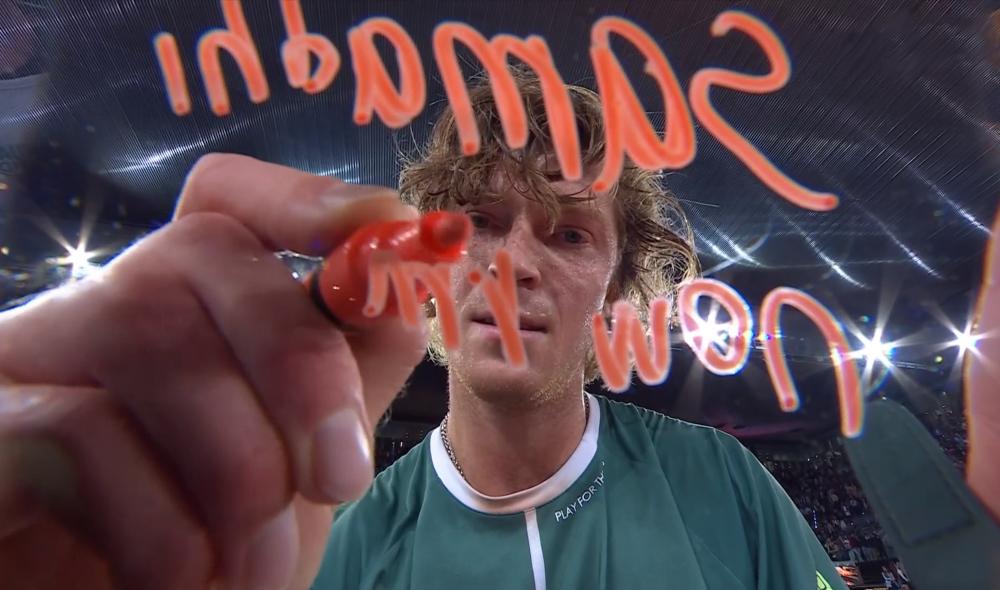

It's no secret that managing the mental side of tennis has always been Andrey Rublev's biggest challenge. And to find the peace and serenity he needs to express the full potential of his talent, the Russian has apparently turned to the ancient wisdom of Buddhist and Hindu traditions.
Following his victory over Felix Auger-Aliassime (4-6, 7-5, 7-5) in the Madrid final, Rublev signed the camera with a potentially enigmatic "Samadhi, now I'm free". "Samadhi" is a concept derived from Hinduism and Buddhism, referring to a particular state of meditative consciousness. A state that is supposed to enable the attainment of spiritual liberation. The Russian seems to have taken this 2nd Masters 1000 of his career (after Monte-Carlo 2023) to mean that he has achieved this powerful feeling of liberation. He will have the opportunity to confirm this next week in Rome.


 Madrid




 As a laboratory for tomorrow’s tennis, does the Next Gen Masters have a future?
  Tennis: the little-known truths about the offseason, between rest, stress and physical survival
  What if tennis lost its soul? The case of robotized officiating, between tradition and a dehumanized modernity
  Features - Saudi Arabia, injuries, war, and business: the fascinating underbelly of tennis revealed by TennisTemple
