


Even if Fritz is No. 5, we don’t know if he’s better than Medvedev, Tsitsipas, or Norrie," Rublev explains the inconsistencies on the tour


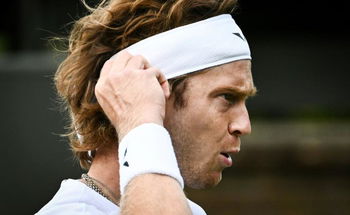
On the sidelines of his Wimbledon round of 16 match against Alcaraz, Rublev shared his thoughts on the early exits of top seeds. Indeed, many have noticed that lower-ranked players are increasingly being upset by opponents who, on paper, are far less accomplished. According to the Russian, this trend can be explained by several factors:
"First of all, the overall level of tennis has improved significantly. Almost every player can serve at 220 km/h now. Then, even the world No. 90, who usually loses because they hit hard without much strategy—well, on a good day, all their shots land in, and they put you in serious trouble.
Of course, when you’re higher-ranked, everyone expects you to win. A top 10 player facing a world No. 90 can’t afford to lose even a set 7-5. Plus, the higher-ranked player won’t approach the match the same way they would against another top 10 opponent. These factors play a huge role in these moments.
In the past, you could see a clear difference between the top 10 and the rest. But today, the gap is between the top two—Alcaraz and Sinner—and those ranked in the top 50. From No. 3 or 4 onward, the level is the same as the rest. Taylor Fritz is ranked No. 5. We don’t know if he’s better than Medvedev, Tsitsipas, Norrie, or Tiafoe. Yet, Tiafoe is world No. 12. That just shows how evenly matched the level is now.


 Wimbledon








 When tennis stars change courts: from Noah the singer to Safin the deputy, another match – the battle of reinvention
  As a laboratory for tomorrow’s tennis, does the Next Gen Masters have a future?
  Tennis: the little-known truths about the offseason, between rest, stress and physical survival
  What if tennis lost its soul? The case of robotized officiating, between tradition and a dehumanized modernity
