


"It's a terrible year," Zverev gives an honest assessment of his first half of the season


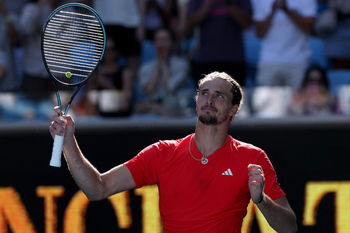
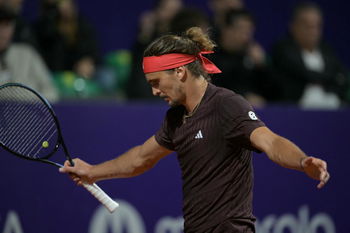
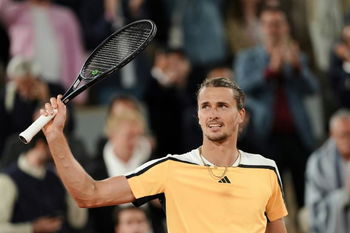
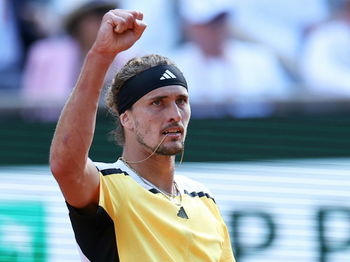
World No. 3 Alexander Zverev is having a relatively tough 2025 season. After reaching the Australian Open final at the start of the year against Jannik Sinner, the German has since endured a difficult period with early exits in several tournaments, including Indian Wells, Monte-Carlo, and most recently at Wimbledon, where he lost to Arthur Rinderknech in the first round.
Winner of the Munich tournament, Zverev also reached the quarterfinals at Roland-Garros and Rome, as well as the semifinals in Halle and the final in Stuttgart. A guest on the *Nothing Major Podcast* recently, the 28-year-old answered questions from Sam Querrey, John Isner, and Steve Johnson, particularly about his start to the season, which has fallen short of his expectations.
"To be honest, from a personal standpoint, it’s been a terrible year so far. Many times, I’ve felt lost on the court, especially after the Australian Open final.
I lost another Grand Slam final. I remember going into that match thinking I was going to win. In the other two (against Thiem at the 2020 US Open and Alcaraz at the 2024 French Open), I had so many opportunities—they were five-set battles.
I played Carlos (Alcaraz) at Roland-Garros last year, and for me, facing Carlos on clay is one of the toughest challenges in tennis right now. This year, against Jannik (Sinner), I went in with confidence, but I got smoked.
Apart from serving, he did everything much better than me. I walked off the court thinking, ‘I really didn’t know what to do.’ I went through a very tough mental period after that match.
I made some mistakes. First, instead of resting at home and processing what had just happened, I only spent three days at home and flew straight to Argentina after playing a Grand Slam final.
I had some of my best off-court moments in Argentina, but when I was playing, I felt like my motivation wasn’t the same, like I was playing awful tennis.
Playing a tournament just days after Melbourne was a big mistake. In a way, I burned out for several months. I didn’t feel motivated to play, to train, I wasn’t enjoying myself on the court. I lost quite a few matches to players I shouldn’t be losing to, even when I was ahead in the score.
I paid the price. Wimbledon wasn’t the best experience for me, that’s for sure. But I think I’ve managed to learn some good lessons from the defeat. I withdrew from several tournaments, took some time off, and now I feel fresher, ready to compete again.
Maybe I won’t play my best tennis in Canada or Cincinnati, but I feel that by the US Open, I’ll be back in a position to be a credible title contender, and that’s where I want to be," Zverev said recently.




 Struggles with injuries and lack of money: the double punishment for tennis players far from the Top 100 stars
  Tennis, Saudi Arabia’s new playground
  The outfit wars: how clothing contracts dominate the tennis business
  The impact of the war on tennis in Ukraine: financial aid, foundations, governing bodies and all‑round headaches
